

MSI App Player 10.42.75.6311
MSI App Player is a free, lightweight Android emulator for Windows built with BlueStacks, offering a cleaner, less ad-heavy experience than the original. It supports up to 240 FPS, runs Android 7.1.1, and includes key mapping, macros, multi-instance, and controller support. You'll need virtualization enabled and ideally 8–16 GB RAM for smooth performance. It's generally safe but had past driver vulnerabilities, so keep it updated and download only from MSI's official site. For gamers wanting a fast, no-nonsense emulator without the bloat, it's a solid pick.
- Free
- Windows
- Nov 5, 2026
Screenshots
About MSI App Player
MSI App Player Download, Android Emulator for PC Gaming
TL;DR Quick Take / Who is this for?
MSI App Player is a free Android emulator built on the BlueStacks engine and tuned by MSI for its own gaming laptops, desktops, and handhelds[reference:0][reference:1]. In practice, it delivers the same core BlueStacks compatibility with MSI-specific performance profiles, thermal management through MSI Center, and driver-level adjustments aimed at smoother frame delivery[reference:2]. The headline number is a 240 FPS ceiling on capable hardware, alongside support for multi-instance play, custom keymapping, and a Console Mode for controller input[reference:3]. It is free to download and use, with in-game purchases remaining separate[reference:4]. The caveats are important. It is not a separate engine, MSI’s own landing page labels it “MSI App Player x BlueStacks,” which is effectively an admission that this is a co-branded build rather than an independent product[reference:5]. On non-MSI systems it runs, but the tuning and MSI Center integration that justify its existence largely do not apply[reference:6]. Some users also report that the ad-free reputation it once carried is not reliable, with comparisons noting it inherits BlueStacks’ ad behaviour[reference:7]. MSI App Player is the right pick if you already own MSI hardware and want a vendor-signed emulator that integrates with MSI Center. For everyone else, the standard BlueStacks download or a lighter alternative is usually the more sensible starting point[reference:8].
Quick Info Box
| License Type | Freeware (in-game purchases separate) |
|---|---|
| File Size | Approx. 157.5 MB (installer) |
| OS Compatibility | Windows 7 / 8 / 10 / 11 |
| Latest Version | 10.42.167.6308 (October 2026) |
| Developer | MSI (Micro-Star International) / BlueStacks engine |
Key Features & Real-World Usability
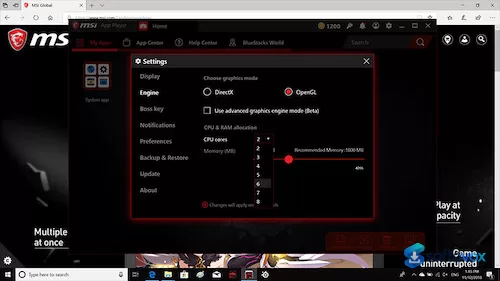
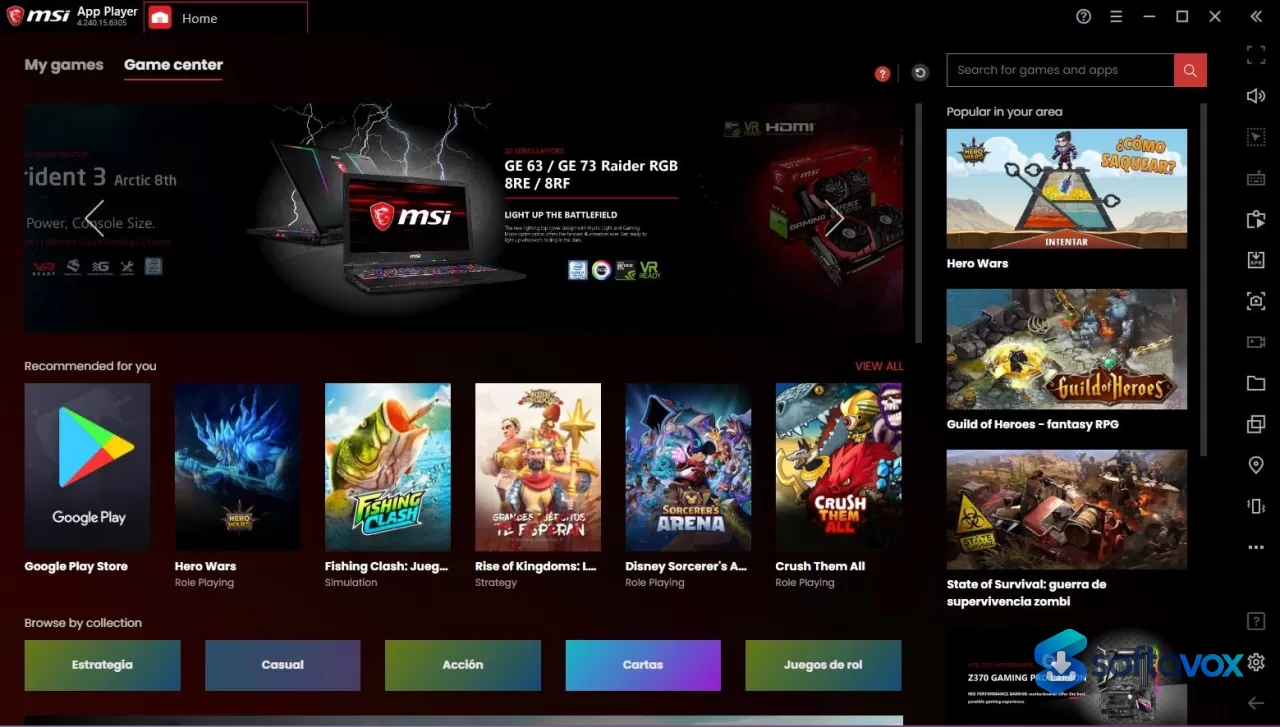
MSI App Player’s feature set is best understood as BlueStacks plus MSI-specific tuning. The emulator runs Android games and apps on Windows, and the MSI layer adds performance profiles, resource prioritisation, and thermal management that can be controlled through MSI Center[reference:9]. On supported MSI hardware, that integration is the main reason to choose this build over the generic BlueStacks download. The emulator supports a 240 FPS ceiling, which is far beyond what most phones can sustain, and the practical benefit shows up in fast-motion games where camera movement and swipes feel more responsive[reference:10]. Multi-instance mode lets you run several emulator windows at once, which is useful for managing multiple accounts or running a game alongside another app, and each instance can be configured with its own performance level[reference:11]. Control mapping is another strong point. Drag-and-drop keymapping, gamepad support, and a dedicated Console Mode make mobile shooters and RPGs playable with a keyboard and mouse or a controller, and macro recording is available for repetitive inputs[reference:12][reference:13]. Cloud and local play are both supported, so you can stream a large game instead of installing it locally and switch between titles without waiting for downloads[reference:14]. Graphics options include resolution, DPI, and a choice between DirectX and OpenGL engines to match the game and the hardware[reference:15]. The friction points are familiar from the BlueStacks ecosystem. Enabling virtualization in BIOS is effectively required for good performance, and the recommended specification climbs to 16 GB of RAM for multi-instance use[reference:16]. The interface will be immediately familiar to BlueStacks users, which is helpful for migration but does little to address the clutter that some users dislike in the parent product[reference:17].
- 240 FPS ceiling: Supported hardware can push frame rates far beyond phone limits, improving responsiveness in shooters and racing games[reference:18].
- MSI Center integration: One-click performance profiles, thermal management, and resource prioritisation for consistent gameplay under load[reference:19].
- Multi-instance play: Run multiple emulator windows simultaneously, each with its own performance settings, for account management or parallel gaming[reference:20].
- Advanced control mapping: Drag-and-drop keymapping, gamepad support, macro recording, and a Console Mode for controller-based play[reference:21][reference:22].
- Cloud and local play: Stream games without installing them locally, or run them from disk, and switch between titles quickly[reference:23].
- Graphics flexibility: Choose resolution, DPI, and DirectX or OpenGL rendering to match game requirements and hardware capabilities[reference:24].
- Vendor-signed installer: MSI-signed downloads and updates from the official site reduce risk compared with third-party repackages[reference:25].
Pros, Cons & Community/User Feedback
Community sentiment around MSI App Player is mixed, and the split maps closely to whether the user owns MSI hardware. The most positive framing comes from comparisons that describe it as “the closest thing to an easy to use debloated Bluestacks,” noting that it runs well and that the MSI build has historically been associated with a cleaner interface than the ad-heavy parent product[reference:26]. That reputation is not universal, however. A 2026 emulator comparison states plainly that MSI App Player’s ads are “same as BlueStacks,” which undercuts the debloated narrative for users who encounter the current build[reference:27]. On the performance side, the MSI-specific tuning is real but conditional. Reviewers note that the emulator can hit high frame rates with the right setup, and that MSI Center profiles help sustain performance during longer sessions[reference:28][reference:29]. The criticism that surfaces most often is not about crashes or instability but about identity and value. Technical analyses point out that MSI App Player is a rebadged BlueStacks build, and that the same engine can be downloaded directly from BlueStacks without MSI’s branding[reference:30][reference:31]. For non-MSI users, that makes the MSI layer a cosmetic addition rather than a functional upgrade. There is also a practical installation complaint: MSI App Player has historically been pushed onto MSI systems through MSI Center or Dragon Center prompts, which is why so many people discover it already installed and search for whether to keep it or remove it[reference:32]. Bloatware-removal guides classify it as “useless unless you actively play Android games on PC,” which is a fair summary for the majority of users who never open it[reference:33]. The positive sentiment that exists comes from gamers who use the keymapping and multi-instance tools regularly and from MSI owners who value the driver-level integration. The negative sentiment comes from users who expected a distinctly better emulator and found a reskin, or who never wanted an emulator in the first place.
Pros
- Free to download and use, with no subscription or licence fee[reference:34]
- 240 FPS ceiling on capable hardware for smoother, more responsive gameplay[reference:35]
- Deep MSI Center integration for performance profiles and thermal management on MSI systems[reference:36]
- Multi-instance support with per-instance performance configuration[reference:37]
- Comprehensive keymapping, macro recording, and Console Mode controller support[reference:38]
- Cloud play option saves local storage and reduces download wait times[reference:39]
- Vendor-signed installer and updates from MSI’s official site[reference:40]
Cons
- Not a unique engine, it is a co-branded BlueStacks build with MSI branding[reference:41]
- The MSI-specific tuning and MSI Center integration offer little benefit on non-MSI hardware[reference:42]
- Reports of ad behaviour comparable to BlueStacks undermine the “ad-free” reputation[reference:43]
- Often pre-installed or prompted through MSI Center, which contributes to bloatware concerns[reference:44]
- Requires BIOS virtualization and 8–16 GB of RAM for good performance, especially with multiple instances[reference:45]
- Users who do not play Android games on PC have no reason to keep it installed[reference:46]
- The same underlying engine is available directly from BlueStacks without the MSI layer[reference:47]
Final Verdict & Safe Download Advice
MSI App Player is a sensible choice for one specific audience: gamers who already own MSI hardware and want an Android emulator that integrates with MSI Center, carries a vendor signature, and receives updates coordinated with MSI’s drivers and firmware. For that group, the performance profiles and thermal management are genuinely useful, and the 240 FPS ceiling and multi-instance tools cover the practical needs of mobile gaming on a desktop or laptop. For everyone else, the value proposition weakens considerably. The emulator is a rebadged BlueStacks build, the MSI-specific benefits largely disappear on non-MSI systems, and the same core engine is available directly from BlueStacks. Users who never play Android games on their PC should treat it as bloatware and remove it. Users who do want an emulator but do not own MSI hardware are usually better served by downloading BlueStacks directly or evaluating a lighter alternative. The software is safe when obtained from MSI’s official page, and independent malware analysis of the installer reports a clean file with a valid digital signature from BlueStack Systems[reference:48][reference:49]. The risks are not malware but relevance and performance expectations.
- Download only from MSI’s official landing page: The legitimate installer is distributed through MSI’s App Player page. Third-party download sites may repackage the emulator, and the MSI-signed installer is the only version that guarantees vendor support and driver alignment[reference:50].
- Verify the installer size and version: The installer is approximately 157.5 MB, and the current build is 10.42.167.6308[reference:51][reference:52]. A dramatically smaller file or an older version number is a warning sign.
- Check system requirements before installing: The minimum is a 2.2 GHz dual-core CPU and 4 GB of RAM, but 8 GB or more is recommended, and 16 GB is advisable for multi-instance use. Virtualization (VT-x/AMD-V) should be enabled in BIOS for acceptable performance[reference:53][reference:54].
- Decide whether you actually need it: If you do not play Android games on your PC, the emulator offers no benefit and is a reasonable candidate for removal[reference:55]. If you do want an emulator but do not own MSI hardware, compare the standard BlueStacks download before committing to the MSI build[reference:56].
- Watch for installation prompts from MSI Center: MSI software may suggest installing App Player when you search for mobile games on your PC. Decline the prompt if you do not intend to use the emulator, rather than installing it and removing it later[reference:57].
Similar software




Key features
- Free Android emulator for Windows, no subscription or licence fee
- Built on the BlueStacks engine, with MSI-specific tuning and branding
- MSI Center integration, performance profiles, resource prioritisation, and thermal management on MSI hardware
- 240 FPS ceiling, smoother, more responsive gameplay on capable hardware
- Multi-instance play, run multiple emulator windows with separate performance settings
- Advanced controls, drag-and-drop keymapping, gamepad support, macro recording, and Console Mode
- Cloud and local play, stream games or run them locally; switch titles quickly
- Graphics flexibility, adjust resolution, DPI, and DirectX/OpenGL rendering
- Vendor-signed installer, official MSI downloads and updates
- Current build, version 10.42.167.6308; installer approx. 157.5 MB
- OS support, Windows 7 / 8 / 10 / 11
Frequently asked questions about MSI App Player
Is MSI App Player safe to install?
Is MSI App Player free?
What Windows versions can run MSI App Player?
Is MSI App Player the same as BlueStacks?
MSI App Player or BlueStacks, which should I use?
Why won't MSI App Player start or run smoothly?
What’s new in MSI App Player 10.42.75.6311
Compatibility improvements: Periodic fixes for smoother integration with new Windows updates and drivers.
Performance optimizations: Enhancements for a smoother experience and lower latency in games.
Bug fixes: Resolution of known issues and general stability improvements.
Versions
| Version | Release date | Platform | File size | |
|---|---|---|---|---|
| MSI App Player 10.42.75.6311 Latest version | Dec 3, 2025 | Windows | 157.5 MB | Download |
Comments about MSI App Player
No comments yet. Share your experience with this program!